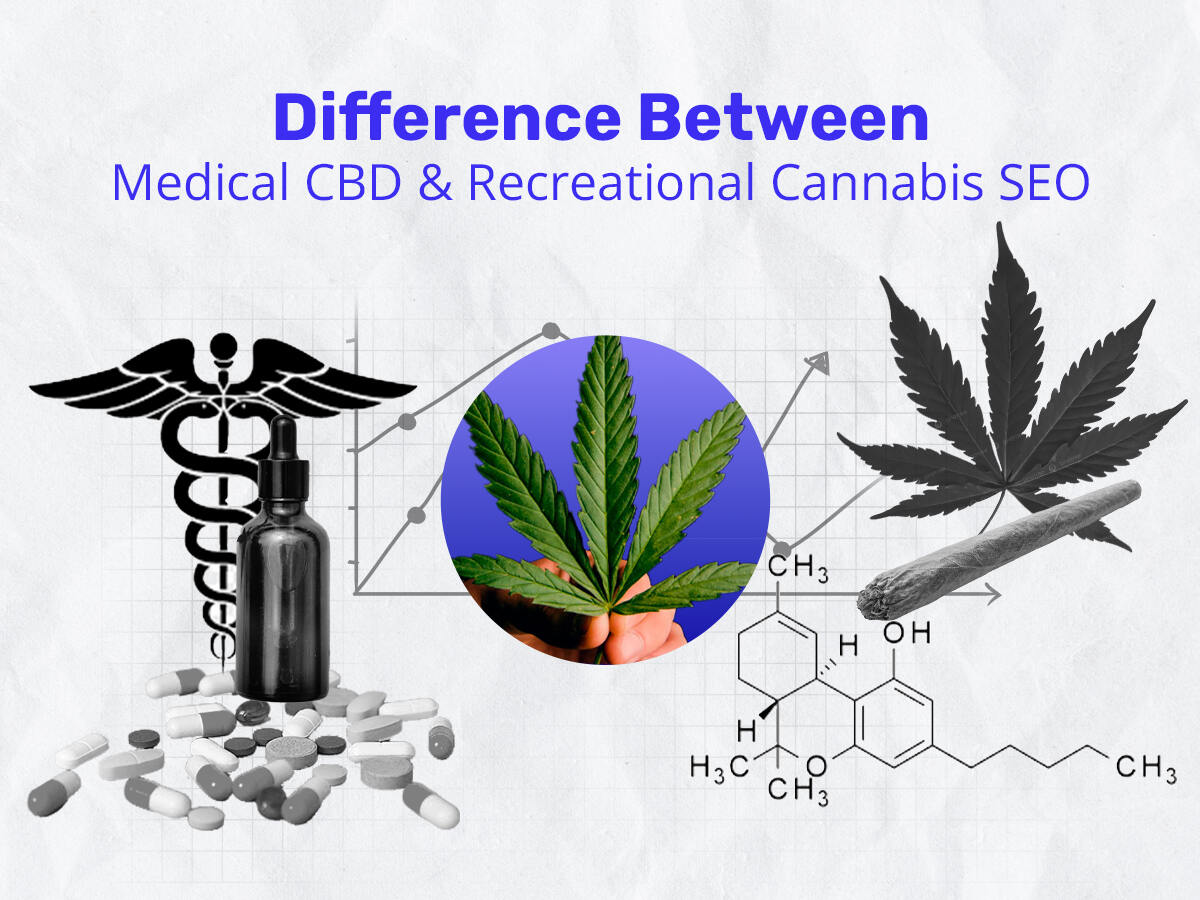
Difference Between Medical CBD & Recreational Cannabis SEO
Cannabis is a fascinating plant that has captured global attention, but not all cannabis is the same. Some products are carefully designed for medical use, helping people manage pain, anxiety, and other health conditions, while others are meant purely for recreational enjoyment, providing relaxation, euphoria, or a social experience. This distinction is important not only for users but also for content creators and marketers, because the way people search for and interact with these products is very different.
In this guide, we’ll break down the key differences between medical CBD and recreational cannabis, from purpose and quality to shopping experience and legal regulations. We’ll also explore SEO strategies tailored for each type, showing you how to create content that ranks, builds trust, and reaches the right audience.
By the end of this article, you’ll have a clear understanding of how to approach cannabis content strategically, whether your goal is to educate patients or engage lifestyle-focused users.
Understanding Medical vs Recreational Cannabis for SEO
Medical CBD and recreational cannabis come from the same plant, but they serve very different purposes. Medical cannabis is used to treat symptoms and improve health, while recreational cannabis is used for fun and relaxation.
For content creators and SEO specialists, understanding this difference is critical because it affects:
- Who your audience is: Patients look for helpful, safe information. Recreational users look for products and experiences.
- The type of content you create: Medical content must be educational and accurate, while recreational content can be lifestyle-focused and fun.
- Legal compliance: Medical cannabis content must follow strict rules, including avoiding unverified health claims.
These differences shape not only your content but also your outreach. Tailored cannabis & CBD link building services ensure your medical pages stay compliant while your recreational pages attract niche audiences.
Overview of SEO for cannabis content
SEO for cannabis content is different from regular SEO because of strict regulations and varying user intent. Here’s what makes it unique:
- Keyword Strategy:
- Medical cannabis: Long-tail, condition-focused keywords like “CBD for chronic pain” or “cannabis treatment for anxiety.”
- Recreational cannabis: Product, strain, or location-focused keywords like “best sativa strains” or “weed dispensary near me.”
- Medical cannabis: Long-tail, condition-focused keywords like “CBD for chronic pain” or “cannabis treatment for anxiety.”
- Content Tone:
- Medical: Professional, safe, and educational.
- Recreational: Fun, casual, and lifestyle-oriented.
- Medical: Professional, safe, and educational.
- Compliance & Legal Restrictions:
- Advertising is limited on social media and Google Ads. Organic SEO, cannabis-specific platforms, and local SEO become crucial.
- Advertising is limited on social media and Google Ads. Organic SEO, cannabis-specific platforms, and local SEO become crucial.
- Local SEO Importance:
- Both medical and recreational cannabis content benefit from location targeting. Medical may focus on dispensaries near clinics, recreational on nearby retail stores.
What is Medical Cannabis?
Medical cannabis is cannabis that is used to treat specific health conditions or relieve symptoms, under the guidance of a doctor or medical professional. Unlike recreational cannabis, which is used for fun, medical cannabis is carefully selected for its healing properties and controlled effects.
Purpose:
- Reduce chronic pain and inflammation
- Help manage mental health conditions like anxiety or PTSD
- Improve sleep or reduce muscle spasms
- Support treatment for conditions like epilepsy or nausea
By understanding medical cannabis, patients can make informed decisions, and content creators can provide accurate, trustworthy information that aligns with search intent.
Common Conditions Treated by Medical Cannabis
Each condition may require a different cannabis strain or formulation, which is why medical cannabis content must be specific and accurate to help patients.
Medical cannabis is used for many health conditions, including:
- Chronic pain: arthritis, back pain, and general pain management
- Muscle spasms: often in conditions like multiple sclerosis (MS)
- Nausea and vomiting: especially from chemotherapy
- Epilepsy and seizures: certain cannabis compounds reduce frequency
- Mental health issues: anxiety, depression, PTSD
- Digestive disorders: IBS or other gastrointestinal issues
- Menstrual or hormonal conditions: endometriosis, PCOS, dysmenorrhea
THC vs CBD Ratios
Medical cannabis is carefully balanced between two main compounds:
- CBD (Cannabidiol): Non-psychoactive, responsible for therapeutic benefits like reducing inflammation, anxiety, and pain.
- THC (Tetrahydrocannabinol): Psychoactive, can produce a “high,” but small amounts in medical cannabis can enhance pain relief without strong psychoactive effects.
Typical ratios:
Explaining these ratios helps patients and readers understand how medical cannabis works, and it also provides valuable keyword opportunities for content targeting symptoms or treatment types.
- High-CBD, low-THC: Most common for medical use, minimal psychoactive effects
- Balanced CBD:THC: Used when mild psychoactive effects are acceptable for symptom relief
- High-THC: Rare in medical use, usually for specific conditions under supervision
Legal and Compliance Considerations
These considerations impact how content is written and marketed. SEO for medical cannabis must focus on accuracy, trustworthiness, and helpful guidance to satisfy both users and search engines.
Medical cannabis is highly regulated. Important points include:
- Prescription Required: Patients need a doctor’s approval or specialist prescription.
- Regulated Cultivation: Products must meet strict quality standards, including testing for THC/CBD ratios, pesticides, and heavy metals.
- Age and Eligibility Restrictions: Only certain patients with specific conditions are legally allowed to access medical cannabis.
- Marketing Rules: Medical cannabis content cannot make unverified health claims; it must be educational and compliant.
Legal guidelines mean you must rely on penalty-safe CBD links rather than aggressive outreach methods.
What is Recreational Cannabis?
Recreational cannabis is cannabis that is used primarily for enjoyment, relaxation, or social purposes, rather than to treat a medical condition. Its main goal is to provide a pleasant experience for the user.
Unlike medical cannabis, recreational cannabis is not prescribed by a doctor and is usually purchased at retail stores or dispensaries. People use it for:
- Euphoria or “feeling high”
- Relaxation and stress relief
- Socializing and lifestyle enjoyment
- Exploring flavors, aromas, and different cannabis strains
Understanding the purpose is important for content creators because recreational users are looking for experience-focused information, not medical guidance.
User Experience and Lifestyle Focus
Recreational users often search for fun, practical, and lifestyle content, which means content can be more casual and experiential compared to medical cannabis.
Recreational cannabis content focuses on the user experience, including:
- Taste, smell, and texture: highlighting strain aromas or flavors
- Effects and vibes: relaxation, energy, or creativity
- Social context: parties, gatherings, or personal enjoyment
- Product variety: flower, gummies, vapes, edibles, oils
THC vs CBD Ratios
Explaining ratios helps users choose products that match their desired effects and provides SEO opportunities for strain guides, product recommendations, and lifestyle content.
Recreational cannabis usually contains higher THC levels than medical cannabis, which creates the psychoactive “high” effect.
- High THC, lower CBD(Cannabidiol): Most recreational strains are designed to maximize euphoria.
- CBD content: Usually low, so therapeutic effects are secondary.
- Quality variance: Recreational cannabis may have inconsistent THC/CBD levels, especially in unregulated or illicit markets.
Legal and Compliance Considerations
Content creators must focus on accurate, legal, and experience-oriented information. Emphasizing legal compliance helps build trust with readers and ensures content avoids regulatory issues.
Recreational cannabis is regulated differently than medical cannabis. Key points include:
- Age restrictions: Usually 18+ or 21+ depending on local law
- Possession limits: Laws often limit how much cannabis a person can buy or carry
- Retail licensing: Only licensed dispensaries or stores can sell recreational cannabis
- Advertising limitations: Social media, Google Ads, and traditional advertising have strict restrictions
- Variable quality: Recreational products may not always meet medical standards
Key Differences Between Medical and Recreational Cannabis
1. Purpose and Use Cases
Purpose defines content type and SEO strategy. Medical content must be educational, while recreational content can be lifestyle-oriented.
The main difference between medical and recreational cannabis is their purpose:
- Medical Cannabis:
- Used to treat health conditions and relieve symptoms.
- Prescribed by doctors for conditions like chronic pain, epilepsy, anxiety, or muscle spasms.
- Users seek reliable, safe, and consistent effects.
- Recreational Cannabis:
- Used for fun, relaxation, and social enjoyment.
- Focuses on providing a pleasant experience rather than medical relief.
- Users look for flavor, aroma, or high THC effects.
2. Quality and Cultivation Standards
High-quality, tested medical cannabis ensures predictable effects and safety, while recreational cannabis focuses more on experience than precision.
- Medical Cannabis:
- Grown in controlled environments, often indoors.
- Strict testing for THC/CBD ratios, pesticides, and heavy metals.
- GMP-certified in some regions, ensuring high-quality, safe products.
- Recreational Cannabis:
- Quality can vary; some products may be inconsistent or less regulated.
- Cultivation standards may not always ensure safety or consistent potency.
3. Shopping Experience
Shopping experience impacts how content should guide users to medical cannabis content is educational and supportive, recreational content is experiential and product-driven.
- Medical Cannabis:
- Requires a doctor’s prescription or medical card.
- Purchased through licensed medical dispensaries.
- Sellers must follow strict training and certification standards.
- Recreational Cannabis:
- Available at licensed retail stores where legal.
- Age verification is required (usually 18+ or 21+).
- Shopping is more casual, focusing on products, strains, and lifestyle experience.
4. Health vs Leisure Benefits
Understanding the difference in benefits allows content to match user expectations and attract the right audience, increasing SEO relevance.
- Medical Cannabis:
- Provides therapeutic benefits for conditions like pain, nausea, anxiety, and seizures.
- Effects are measured, consistent, and controlled.
- Recreational Cannabis:
- Offers pleasure, relaxation, and social enjoyment.
- Benefits are mostly subjective, focusing on mood and experience.
SEO Strategy for Medical CBD Cannabidiol & Recreational Cannabis
1. Keyword Targeting (Long-tail vs Local/Lifestyle)
Keyword targeting should align with user intent to improve SEO relevance and search rankings.
- Medical Cannabis:
- Focus on long-tail, condition-specific keywords.
- Examples: “CBD Cannabidiol for chronic pain,” “cannabis treatment for anxiety,” “high-CBD oil for epilepsy.”
- Users are searching for information, solutions, and safe treatment options.
- Recreational Cannabis:
- Focus on product, strain, and location-based keywords.
- Examples: “best sativa strains,” “weed gummies near me,” “local dispensary deals.”
- Users are looking for experience, purchase options, and lifestyle content.
2. Content Marketing Approach (Educational vs Experiential)
Matching content style with audience expectations improves engagement and signals search engines that your content satisfies user intent.
- Medical Cannabis:
- Content should be educational, authoritative, and evidence-based.
- Include guides, symptom-based solutions, and scientific references.
- Example: “How CBD helps reduce chronic pain” or “Safe cannabis dosing for MS patients.”
- Recreational Cannabis:
- Content should be experiential, engaging, and lifestyle-oriented.
- Focus on strains, flavor profiles, product reviews, and social events.
- Example: “Top 5 indica strains for relaxation” or “Best cannabis edibles in London.”
3. Local and Technical SEO Considerations
Even with legal restrictions on ads, local SEO and technical optimization help your content reach the right audience organically.
- Local SEO:
- Medical: Target keywords near clinics and registered dispensaries.
- Recreational: Target keywords near retail stores or dispensaries, emphasizing availability.
- Technical SEO:
- Both types require fast-loading pages, mobile optimization, schema markup, and secure websites.
- Proper site structure, headings, and metadata improve indexing and ranking.
4. Advertising Restrictions and Alternatives
Understanding advertising limits and alternatives ensures your SEO strategy is both compliant and effective.
- Advertising Limitations:
- Google Ads, Facebook, and Instagram largely restrict cannabis-related advertising, both medical and recreational.
- Google Ads, Facebook, and Instagram largely restrict cannabis-related advertising, both medical and recreational.
- Alternative Approaches:
- Organic SEO: Blog content, guides, FAQs, and product pages
- Industry-specific ad networks: Cannabis-friendly platforms like Weedmaps or Leafly
- Email marketing and newsletters: Target subscribers directly
- Local PR & sponsorships: Community events or dispensary collaborations
Conclusion
Medical CBD Cannabidiol and recreational cannabis come from the same plant, but their purposes and uses are very different. Medical cannabis is primarily used to treat symptoms and support health, while recreational cannabis is used for fun, relaxation, and social experiences.
From an SEO perspective, these differences shape how content should be created and optimized. Medical cannabis content should be educational, evidence-based, and long-tail keyword focused, while recreational cannabis content can be lifestyle-oriented, experiential, and location-based. Aligning content with user intent improves search relevance, engagement, and trust.
Finally, compliance and quality standards play a major role in both cannabis types. Medical cannabis follows strict regulations, lab testing, and prescription rules, while recreational cannabis is governed by age restrictions and retail laws.
Frequently Asked Questions
What is the difference between medical and recreational cannabis?
Medical cannabis is used to treat health conditions and relieve symptoms under medical supervision, while recreational cannabis is used for fun, relaxation, or social purposes.
Is medical cannabis better than recreational cannabis?
Medical cannabis is safer and more controlled, with regulated THC/CBD levels and quality standards. Recreational cannabis focuses on experience, and product quality can vary.
Can recreational cannabis users self-medicate?
Self-medicating with recreational cannabis is not recommended and may be illegal in some regions. Medical cannabis with proper prescription is the safe and legal option.
What is the difference between medical cannabis and CBD?
CBD is one compound in cannabis, usually non-psychoactive, and often used for general wellness. Medical cannabis is the whole product or combination of compounds (CBD + THC) prescribed to treat specific conditions.
How do I choose between medical and recreational cannabis content for SEO?
- Medical content: Focus on educational, authoritative content, long-tail keywords, and compliance.
- Recreational content: Focus on experience, lifestyle, product info, and local SEO.
Are there legal differences between medical and recreational cannabis?
Yes. Medical cannabis usually requires prescriptions and regulated cultivation, while recreational cannabis follows adult-use laws, age restrictions, and retail licensing.


