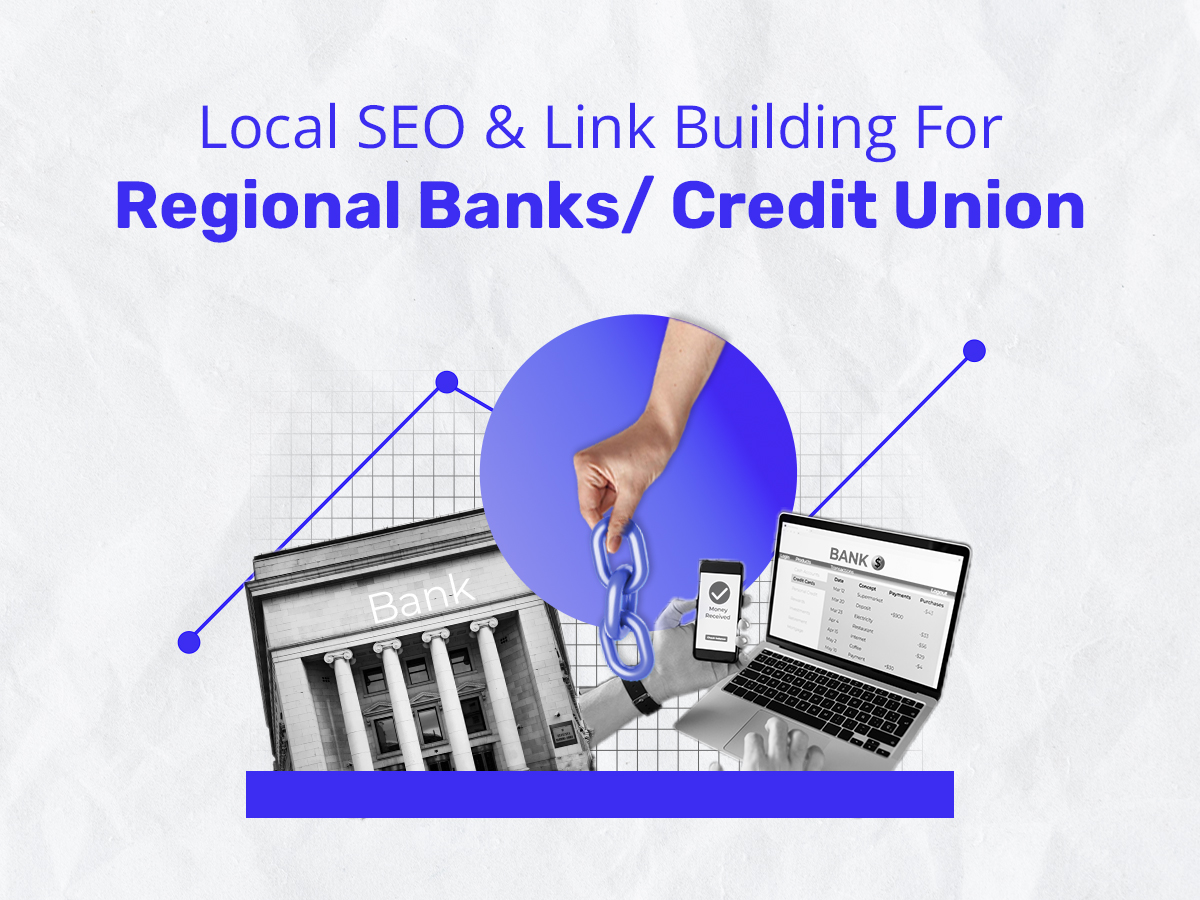
Local SEO & Link Building for Regional Banks / Credit Unions
People don’t search for “banks” anymore, they search for banks near them.
If your branch doesn’t appear in Google Maps or local search results, you’re losing ready-to-convert customers every single day.
Local SEO helps regional banks and credit unions show up exactly when people are looking for nearby financial services checking accounts, auto loans, mortgages, and in-branch support.
In this guide, you’ll learn how Local SEO and local link building actually work for banks, what Google looks for, and how to turn local searches into real branch visits, calls, and applications even if you’re competing with national banks.
Why Local SEO Matters for Regional Banks?
Local SEO is the process of optimizing your bank or credit union’s online presence so that people in your community can easily find your branches, services, and information when they search online. For regional banks and credit unions, this is not just about rankings but about being visible at the exact moment potential members are looking for financial services nearby.
Most customers today don’t drive around looking for a branch, they “Google it.” Studies show that 80% of people check a bank or credit union’s website before visiting in person. If your branch isn’t showing up in local search results or Google Maps, you’re essentially invisible to people actively seeking your services.
One effective way to boost visibility is by using professional link building services for banks and financial institutions, which helps your local content gain authority, attract backlinks from trusted sources, and improve search rankings.
Local SEO ensures that your bank or credit union is seen right in your local community.
Key benefits of Local SEO for regional banks include:
- Attracting local members: By appearing in “near me” searches, you reach users who are ready to act. For example, someone searching “credit union near downtown Dallas” is likely to open a new account or inquire about loans.
- Building community trust: Accurate branch information, updated photos, and positive reviews signal reliability and professionalism.
- Increasing foot traffic and leads: Local SEO drives website visits, calls, and in-person branch visits, converting searchers into members.
How Local SEO Levels the Playing Field vs National Banks?
National banks spend millions on advertising and brand recognition. As a regional bank or credit union, it can feel impossible to compete with that level of visibility. Local SEO offers a cost-effective way to level the playing field.
Here’s how it works:
- Targeted visibility: While national banks aim for broad exposure, Local SEO focuses on your exact location. This means your branch can appear at the top of Google Maps and local searches for phrases like “auto loans in [City]” or “mortgage lender near me.”
- Hyper-local content advantage: National banks rarely create content about specific neighborhoods, schools, or local events. Regional banks can produce blog posts, guides, and branch pages with local relevance that directly appeals to community members.
- Community-based authority: Sponsoring local events, getting featured in local news, and earning backlinks from community organizations strengthens credibility. This is something national banks struggle to replicate at the local level.
- Reviews and reputation: Local banks can actively gather and respond to reviews on Google Business Profiles, fostering trust. These micro-interactions with members influence local rankings and trust signals.
Example: A small credit union in St. Louis started posting branch-specific guides and sponsoring local school events. Within six months, their Google Maps visibility increased, and branch inquiries doubled without spending on expensive national campaigns.
Local SEO vs General SEO for Banks and Credit Unions
Before choosing where to focus your marketing efforts, it’s important to understand how Local SEO differs from General SEO and why each approach impacts banks and credit unions in different ways.
Key Differences for Banks and Credit Unions
Local SEO and general SEO (sometimes called “organic SEO”) serve different purposes, and understanding the distinction is crucial for regional banks and credit unions.
Focusing on local SEO ensures you capture high-intent, nearby users first - people who are far more likely to become members. National banks dominate general SEO, so Local SEO is where smaller institutions gain a measurable advantage.
i. Search Focus
- General SEO: Targets broad, non-location-specific searches. Example: “best savings account” or “auto loan rates.” Anyone across the country can see your content.
- Local SEO: Targets location-based searches with strong intent. Example: “credit union near me” or “mortgage lender in Denver.” These searches indicate the user is ready to visit a branch or take action locally.
Ranking Factors
- General SEO: Relies heavily on backlinks, domain authority, content depth, and overall brand trust.
- Local SEO: Relies on Google Business Profile optimization, NAP consistency (Name, Address, Phone), local citations, reviews, and proximity to the searcher.
Content Strategy
- General SEO: Focuses on broad guides, national news, or informational content.
- Local SEO: Focuses on branch-specific landing pages, local guides, community events, and staff spotlights.
User Intent and Conversion
- General SEO: Attracts users in early stages of research. Conversion may take longer.
- Local SEO: Attracts users with high intent, often resulting in immediate actions like visiting a branch, calling, or applying for a loan.
Local Keywords and User Intent for Regional Banking Searches
Keywords are the bridge between what people search for and what your bank or credit union offers. In Local SEO, understanding intent is critical.
- Types of Local Keywords:
- Service + Location: “Auto loans in Austin,” “mortgage rates near Phoenix.”
- Near Me Searches: “Credit union near me,” “best local bank near me.”
- Community-Specific Queries: “First-time homebuyer programs in Boston,” “student banking for [University] students.”
- Why User Intent Matters:
- Transactional Intent: Keywords like “open checking account near me” indicate users are ready to take action.
- Informational Intent: Keywords like “best savings tips in Seattle” attract users in research mode but still provide an opportunity to guide them toward services.
- Navigational Intent: Searches like “Main Street Credit Union branch hours” help ensure your branch information is accurate and visible.
- Best Practices for Local Keyword Optimization:
- Map each branch to its relevant local keywords.
- Use keywords naturally in headers, meta titles, and branch pages.
- Focus more on local intent than broad topics; this improves conversion and map pack visibility.
Example: A regional bank in Dallas created individual branch pages with titles like “Auto Loans in Plano – [Bank Name]” and embedded Google Maps. Within three months, these pages started appearing in the top 3 map pack results for searches like “auto loans near me.”
Optimizing Google Business Profiles for Bank and Credit Union Branches
For regional banks and credit unions, your Google Business Profile is essentially the new front door. Optimizing it ensures potential members find accurate information, trust your institution, and take action whether that’s visiting a branch, calling, or applying online.
1. Claiming and Verifying Branches
Every branch needs its own GBP. This is crucial because Google treats each location as a separate entity.
Steps to Claim and Verify:
- Search for your branch on Google: Check if a listing already exists.
- Claim the listing: Click “Own this business?” and follow the prompts.
- Verify the branch: Google may send a postcard, call, or email with a verification code. Only verified listings fully appear in search and Maps.
- Maintain control: Assign admin access to your marketing or operations team to ensure updates are managed consistently.
Why It Matters:
- Only verified listings appear reliably in Google Maps and local search results.
- It prevents misinformation or duplicate listings from confusing potential members.
- Verified profiles gain access to insights like search queries, clicks, and calls.
2. Completing NAP & Services
NAP stands for Name, Address, Phone Number. Accuracy and consistency are vital for Google to trust your branch and display it prominently in local search.
Best Practices:
- Name: Use the official branch name consistently across all listings (e.g., “Sunrise Credit Union – Downtown Branch”).
- Address: Include suite numbers and ensure formatting matches your website and other directories.
- Phone Number: Use a local number for each branch. Avoid central call centers if possible.
- Services: List all relevant services offered at that branch (checking accounts, mortgages, auto loans, financial planning).
- Business Hours: Keep them accurate, including holiday schedules.
Why It Matters:
- Consistent NAP prevents Google from splitting rankings across multiple listings.
- Accurate service information increases the likelihood of being found for relevant searches.
- Clear details improve user trust and reduce friction in decision-making.
3. Photos, Posts, and Updates
Visual content and regular updates make your profile more engaging and trustworthy.
Photos:
- Add exterior and interior photos of the branch.
- Include staff photos to personalize the experience.
- Highlight events, community involvement, or ATM facilities.
Posts:
- Use GBP posts to announce promotions, financial education workshops, or community sponsorships.
- Post at least once a week to signal activity and freshness to Google.
Updates:
- Regularly update services, hours, or special alerts.
- Respond to questions in the Q&A section on your GBP.
Why It Matters:
- Profiles with photos and posts get higher engagement.
- Fresh content signals Google that your branch is active and trustworthy.
- Personalized images and posts foster local connections, which national banks often miss.
Branch-Level Landing Pages and Localized Content Strategy
1. Creating Unique Landing Pages
Each branch deserves its own dedicated landing page. This ensures Google recognizes every location as a separate entity and improves visibility in local searches.
Best Practices:
- Include the branch name, address, and phone number prominently.
- Add an embedded Google Map for easy navigation.
- Highlight services offered at that specific branch, such as loans, checking accounts, or financial planning.
- Use local landmarks or neighborhoods to make the page geographically relevant.
Why It Matters:
- Unique pages and backlink analysis improve search rankings for location-specific queries.
- They reduce user confusion and increase the likelihood of visits and conversions.
2. Geo-Targeted Keywords and Local Guides
Incorporate keywords that include your branch’s city or neighborhood.
Examples:
- “Auto loans in Plano”
- “First-time homebuyer programs near Downtown Dallas”
Local Guides:
- Blog posts or guides tailored to the community, e.g., “Best tips for college students in Denver for banking” or “How to buy your first home in St. Louis.”
Benefits:
- Drives targeted traffic that’s more likely to convert.
- Establishes your bank as a local authority and resource hub.
3. Staff Spotlights & Community Highlights
Humanize your branches by featuring staff profiles or community events.
Actionable Steps:
- Introduce key staff members with photos and bios.
- Showcase local sponsorships, charity events, or financial literacy workshops.
Benefits:
- Builds trust and personal connection with potential members.
- Signals community involvement, which can indirectly boost local SEO and backlinks.
Local Reviews and Reputation Management for Banks
1. How to Encourage Reviews
Positive reviews enhance credibility and improve Google rankings.
Tactics:
- Ask happy members in-person or via email for a review.
- Provide QR codes on receipts or flyers linking directly to your GBP review form.
- Include gentle reminders in newsletters or post-transaction emails.
2. Responding to Reviews Effectively
- Respond within 48 hours to all reviews.
- Thank members for positive reviews.
- Address complaints politely and offer solutions.
Impact:
- Demonstrates responsiveness and builds trust.
- Signals Google that your business is active and engaged.
3. Leveraging Reviews on Website and Social
- Feature reviews on your branch landing pages.
- Share positive reviews on social media to showcase credibility.
- Use testimonials in marketing emails to reinforce trust.
Technical and Mobile SEO Requirements for Local Bank Websites
1. Mobile-First and Site Speed
- Ensure your website is responsive on all devices and optimized through a mobile SEO audit.
- Optimize images, enable caching, and reduce unnecessary scripts.
- Aim for page load speed under 2.5 seconds.
Why:
- Mobile traffic is dominant in local searches.
- Faster sites improve user experience and Google rankings.
2. Security & HTTPS
- Use SSL certificates to secure your site.
- HTTPS is both a trust signal for users and a ranking factor for Google.
3. Structured Data (LocalBusiness, FAQ)
- Implement LocalBusiness schema for branches.
- Use FAQ schema to surface common questions in search results.
- Optional: HowTo schema for step-by-step guides like “How to open an account.”
Benefits:
- Improves AI readability and chances of appearing in rich snippets.
Local Link Building Strategies
1. Community Partnerships and Sponsorships
- Sponsor local sports teams, schools, or charity events.
- Request backlinks from partner websites.
Benefit: Strengthens local authority and trust signals.
2. Local Media & News Features
- Pitch stories or press releases to local newspapers, blogs, or online magazines.
- Example: Financial education workshops or local awards.
Impact: Increases backlinks and visibility in the community.
3. Collaborations with Local Influencers
- Partner with local bloggers or community figures.
- Co-create content, social campaigns, or events with them.
Benefit: Boosts brand awareness and generates high-quality local links.
Measuring Local SEO Performance and AI Search Readiness
1. Tracking GBP Insights
- Monitor metrics like calls, clicks, direction requests, and engagement.
- Identify which branches or services get the most attention.
2. Monitoring Google Search Console Metrics
- Track impressions, clicks, and top-performing queries.
- Identify opportunities to optimize underperforming pages.
3 .Preparing for AI & Voice Search
- Use FAQ and Q&A content for voice search optimization.
- Write concise, structured answers that AI assistants like Google Assistant or Siri can read.
- Example: “What are the mortgage rates at [Branch]?” → Answer in a short, factual format.
Local SEO Implementation Checklist and Next Steps
1. Quarterly SEO Audits
- Audit GBP, branch pages, citations, and backlinks every 3 months.
- Fix inconsistencies and update content as needed.
2. Scaling Local SEO Efforts
- Expand strategies to new branches or service areas.
- Automate review requests, content updates, and citation monitoring.
- Track KPIs and continuously optimize for better rankings and community engagement.
Conclusion
Local SEO is the foundation of modern branch growth.
When your Google Business Profiles are optimized, your branch pages are localized, and your reviews and local links are consistent, you don’t just rank better - you become the default choice in your community.
The biggest advantage regional banks have over national institutions is local relevance. By investing in Local SEO, you meet people at the exact moment they need financial services nearby and that’s where real trust and long-term relationships begin.
Start small, audit regularly, and scale what works.
Local visibility today turns into loyal members tomorrow.
Frequently Asked Questions
What is Local SEO for banks and credit unions?
Local SEO is the process of optimizing a bank’s online presence so its branches appear in local search results, Google Maps, and “near me” searches. It helps attract nearby customers who are ready to visit, call, or apply.
Why is Local SEO important for regional banks?
Because most people search for financial services locally. Local SEO helps regional banks compete with national brands by focusing on proximity, relevance, reviews, and community trust.
How does Google rank bank branches in local search?
Google uses three main factors:
- Relevance (services and content)
- Distance (proximity to the searcher)
- Prominence (reviews, links, local authority)
Do banks need separate Google Business Profiles for each branch?
Yes. Each branch should have its own verified Google Business Profile to rank properly in Maps and local search results.
What type of backlinks work best for banks?
Local backlinks from:
- Community organizations
- Local news sites
- Schools, events, and sponsorships
- Chambers of commerce
These links signal real-world authority to Google.
How long does Local SEO take to show results?
Most banks see noticeable improvements within 3–6 months, especially in Google Maps visibility, calls, and direction requests.